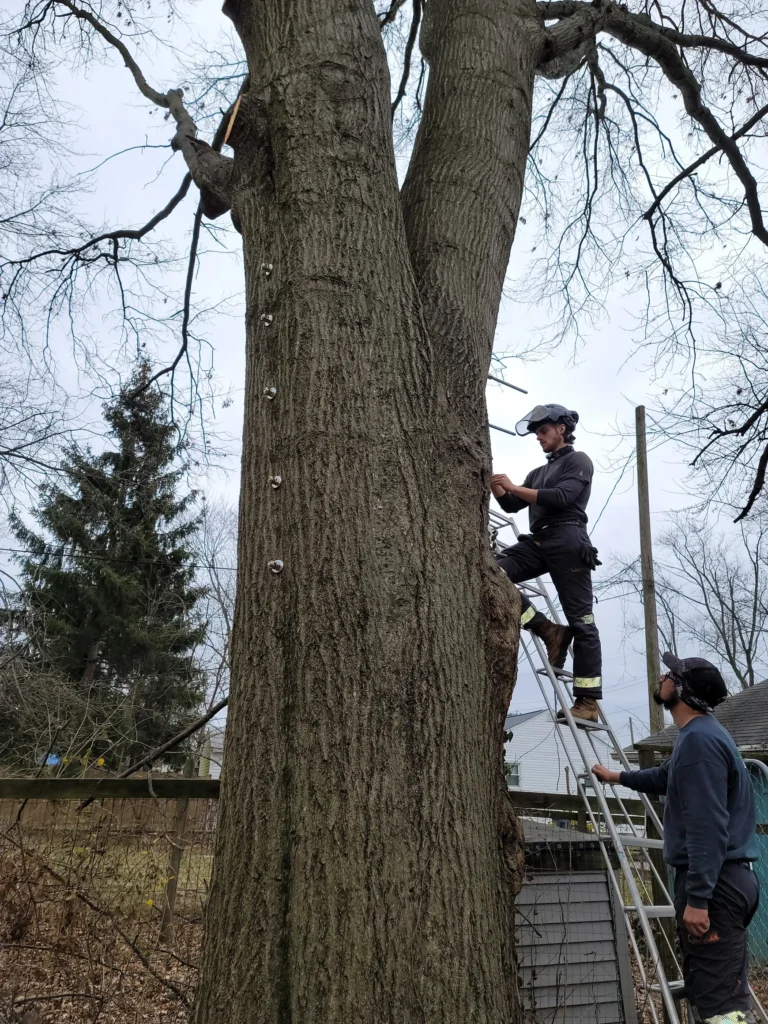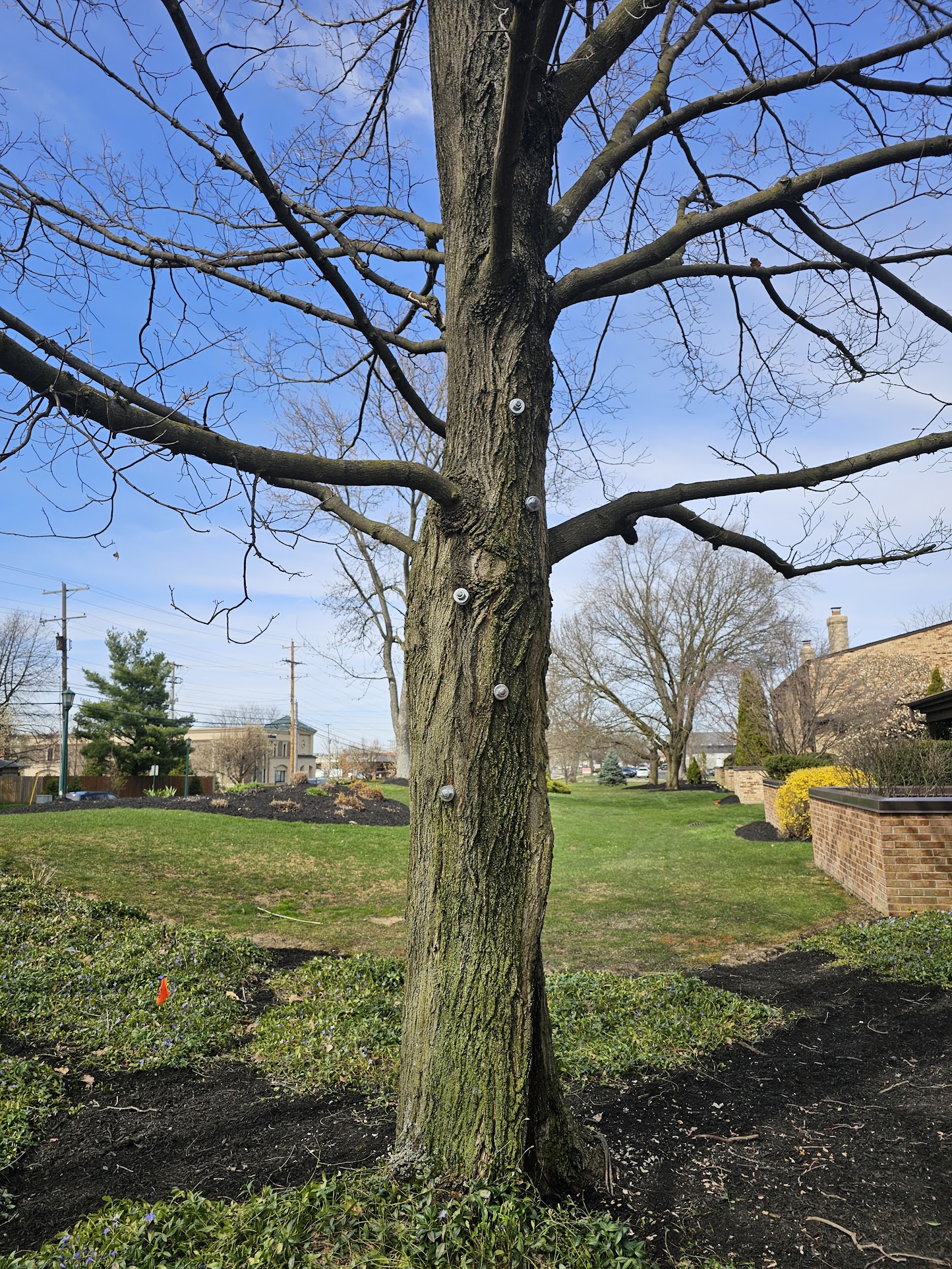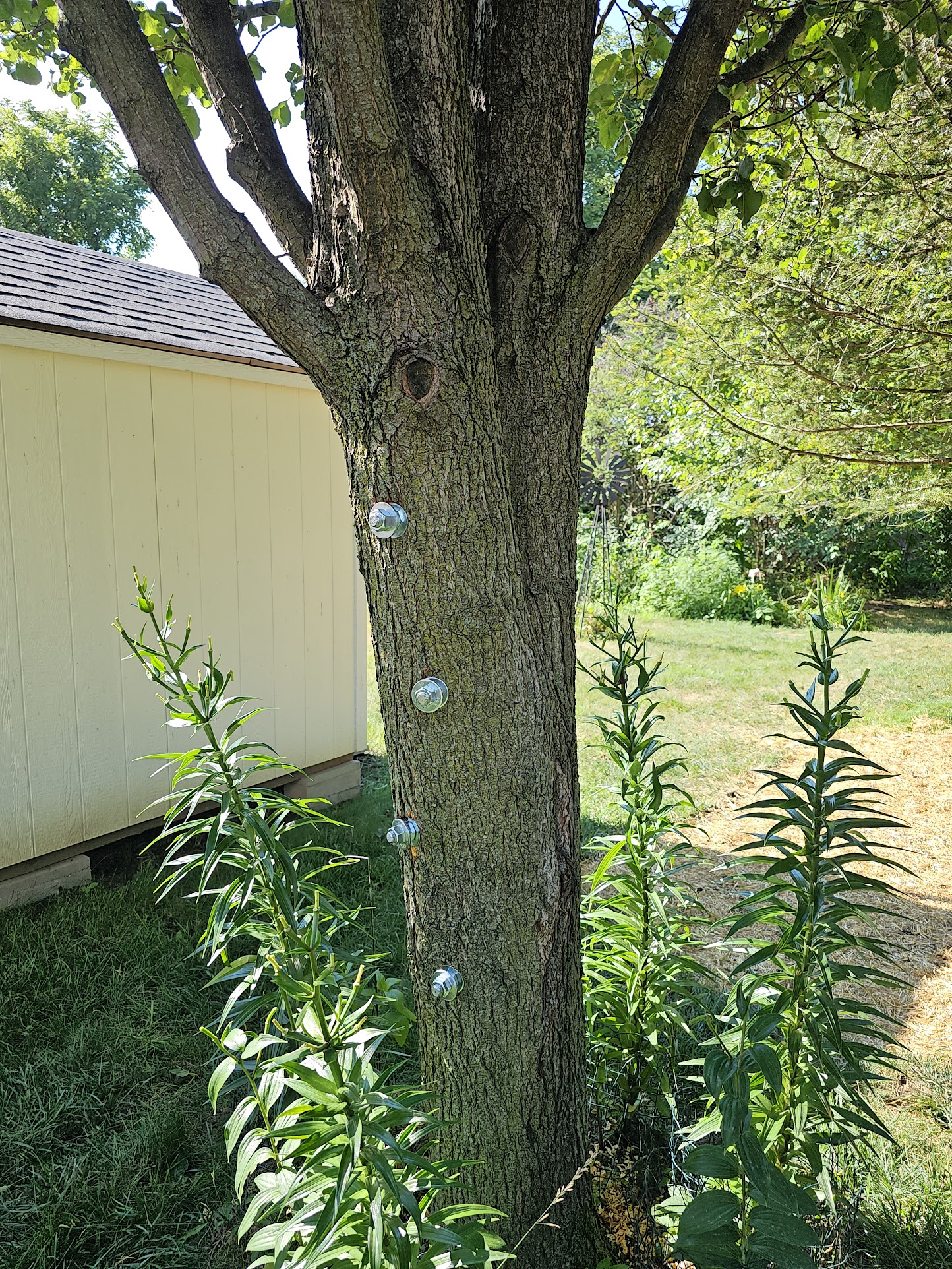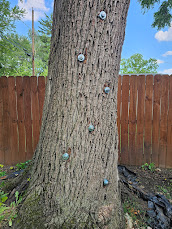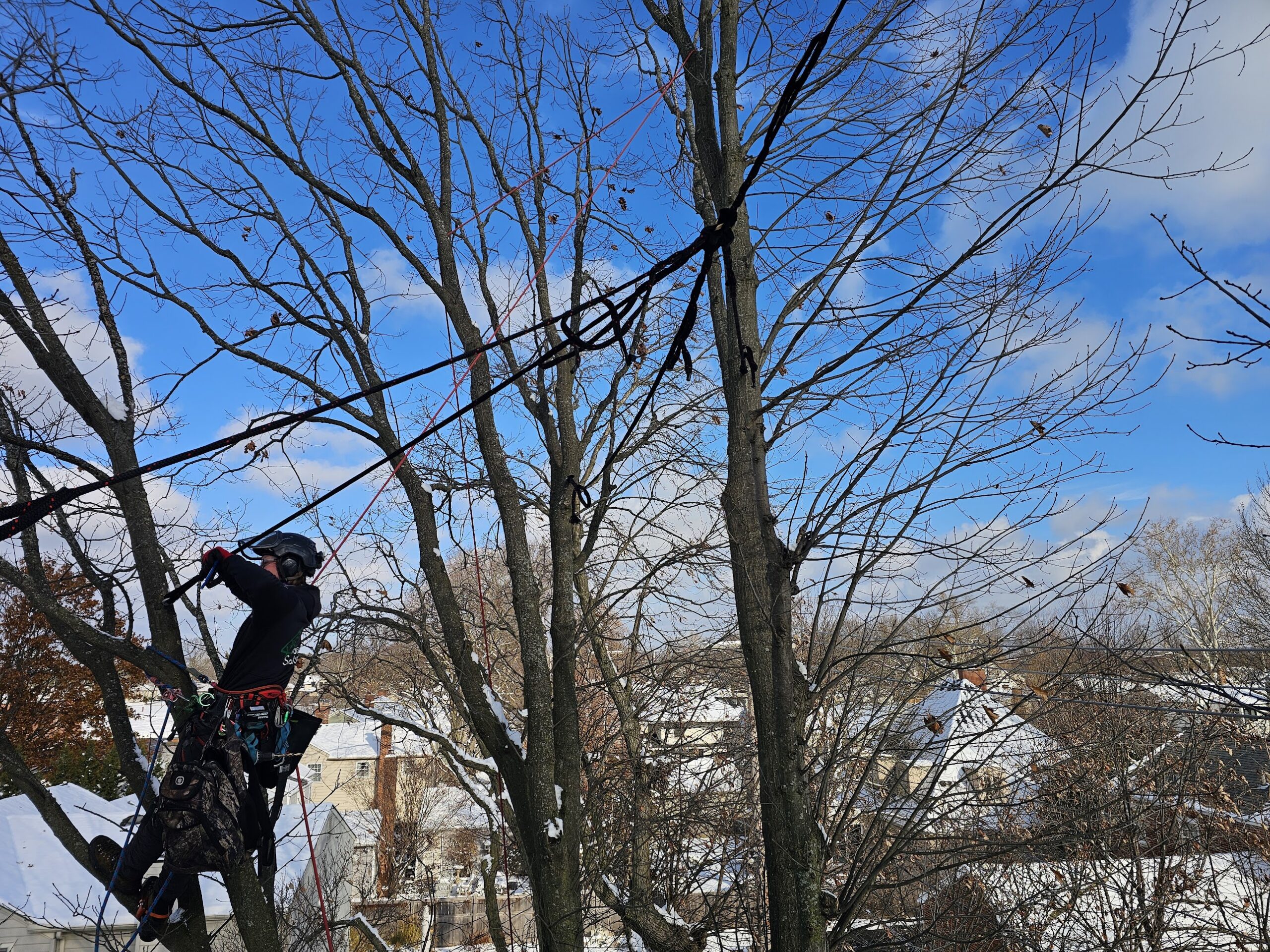

When a tree has a structural weakness — a co-dominant stem, a heavy overextended limb, or a split union — cabling and bracing can extend its life and reduce risk without removal. This is preservation-first tree care.
When Cabling Makes Sense
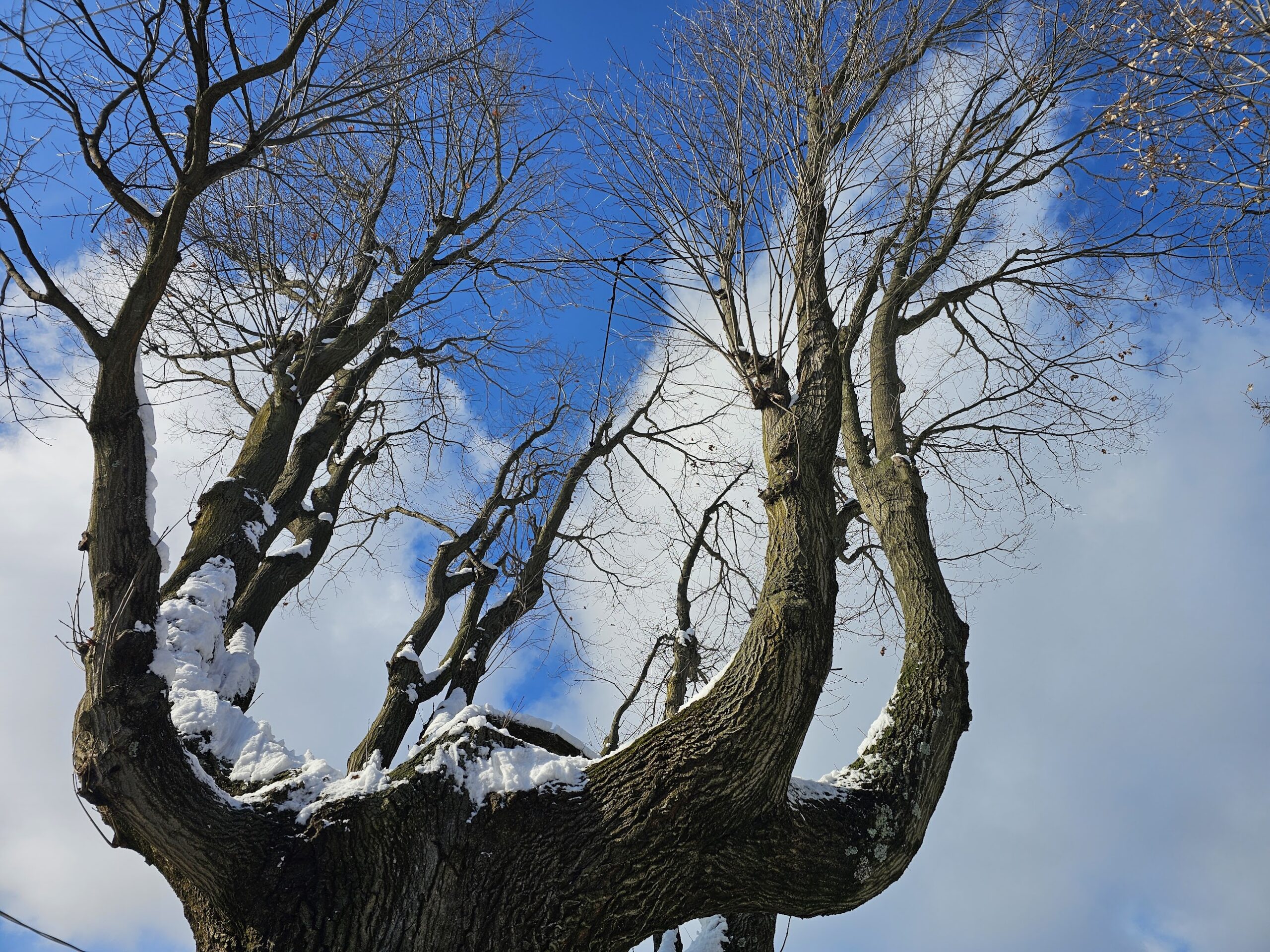
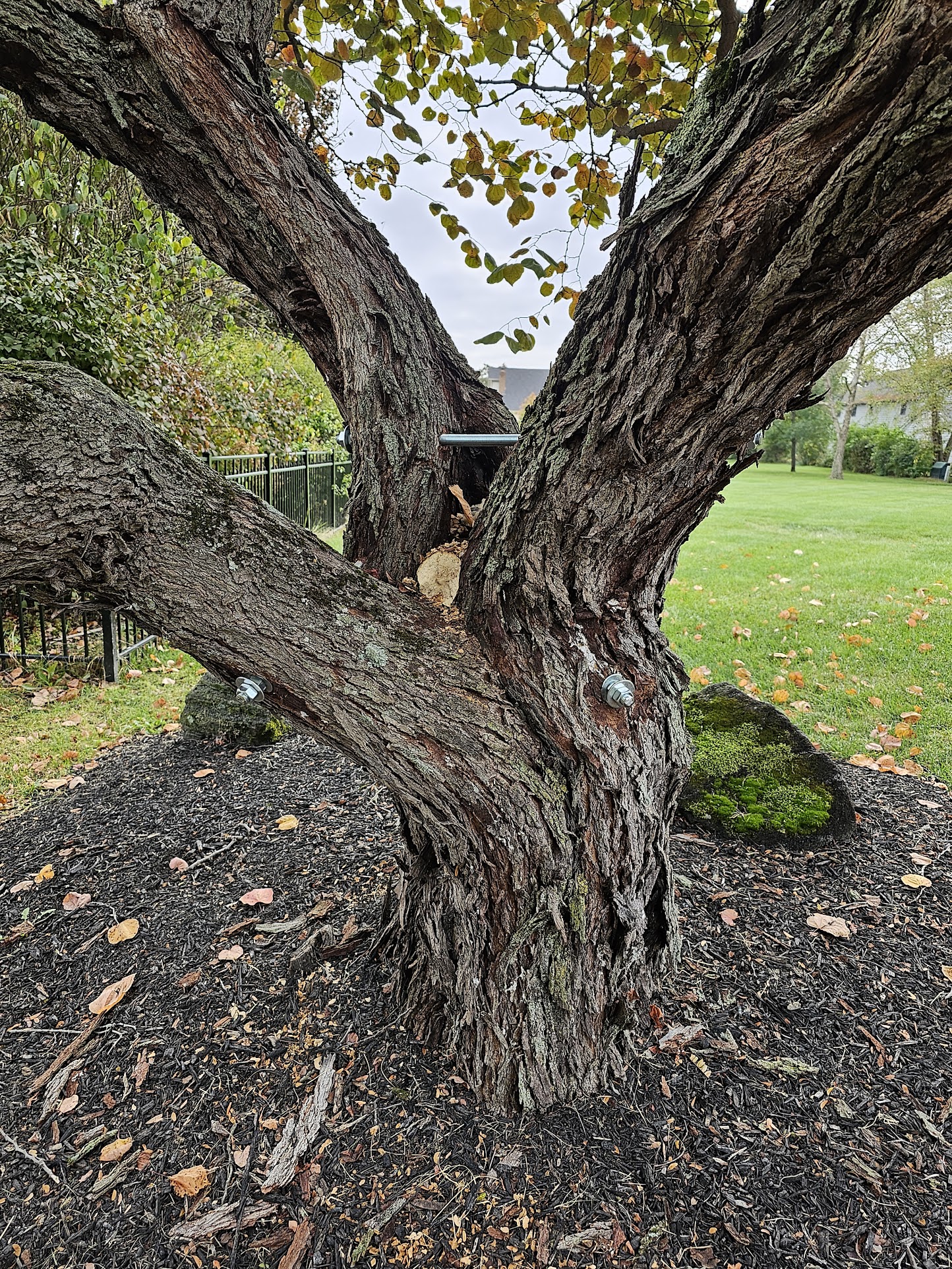
- Trees with included bark at stem unions, prone to splitting under load
- Large, heavy limbs extending well beyond the canopy centerline
- Mature trees with sentimental or structural value worth preserving
- Trees that have survived a partial failure and need supplemental support
What We Install
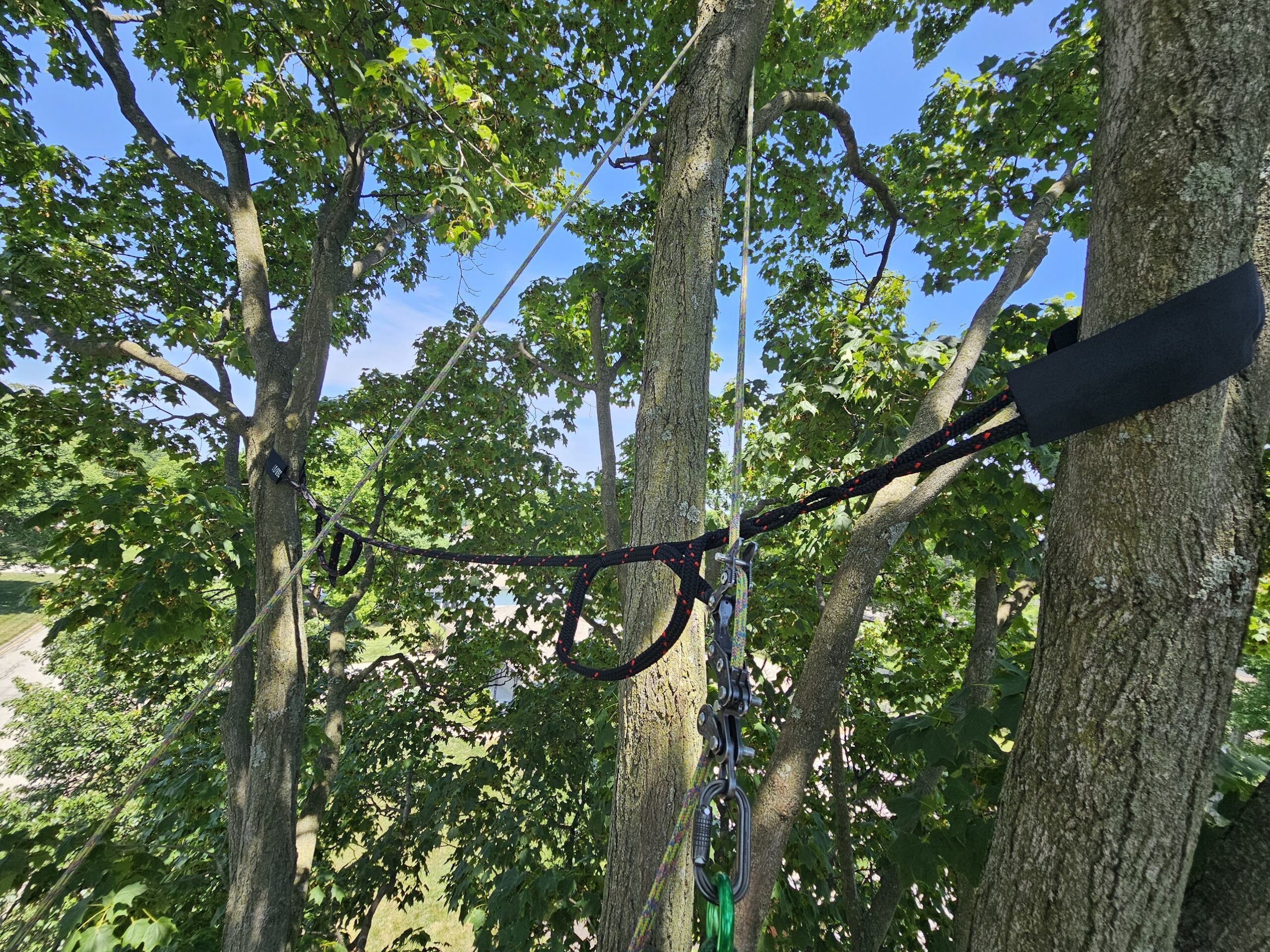
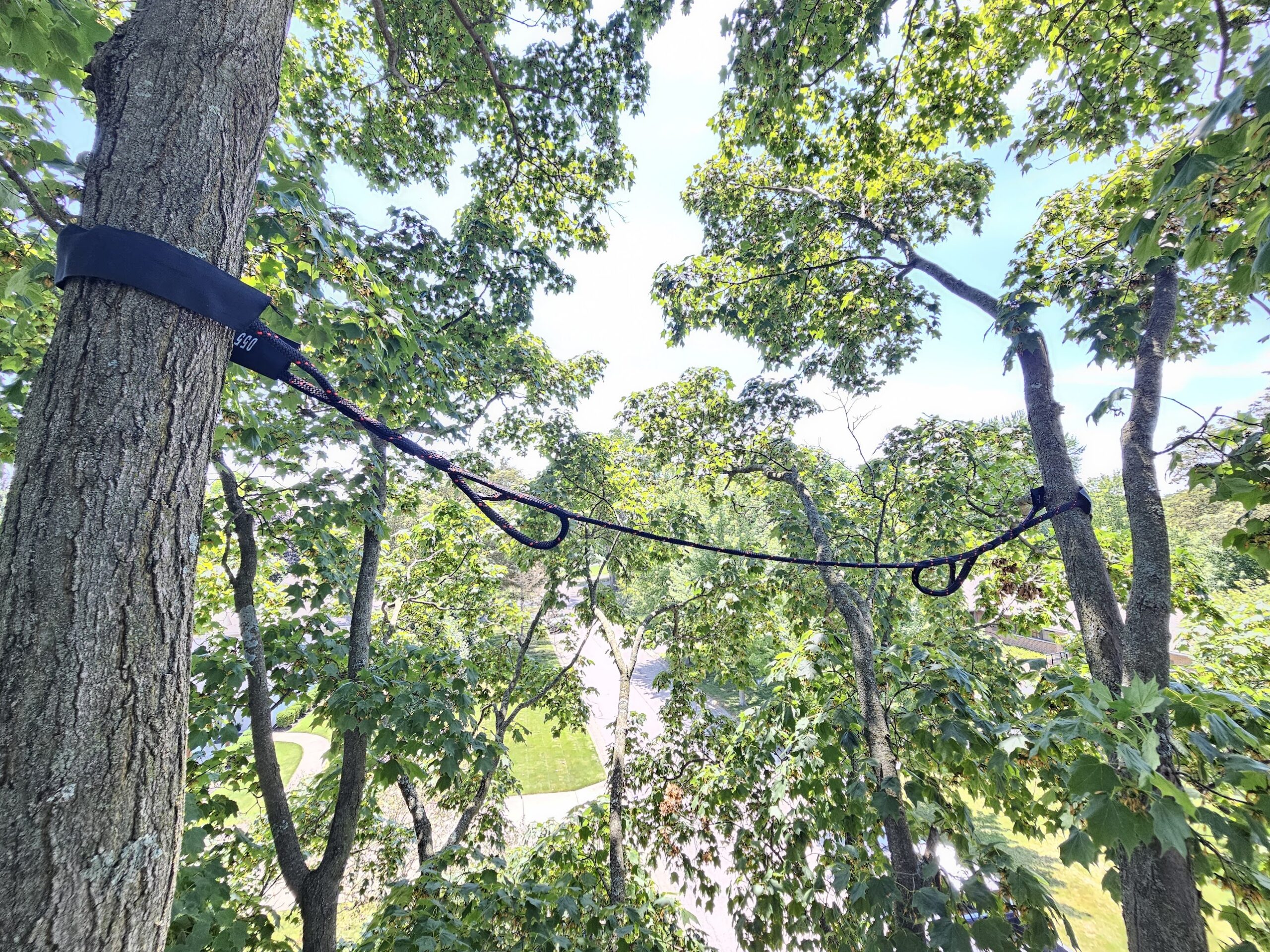
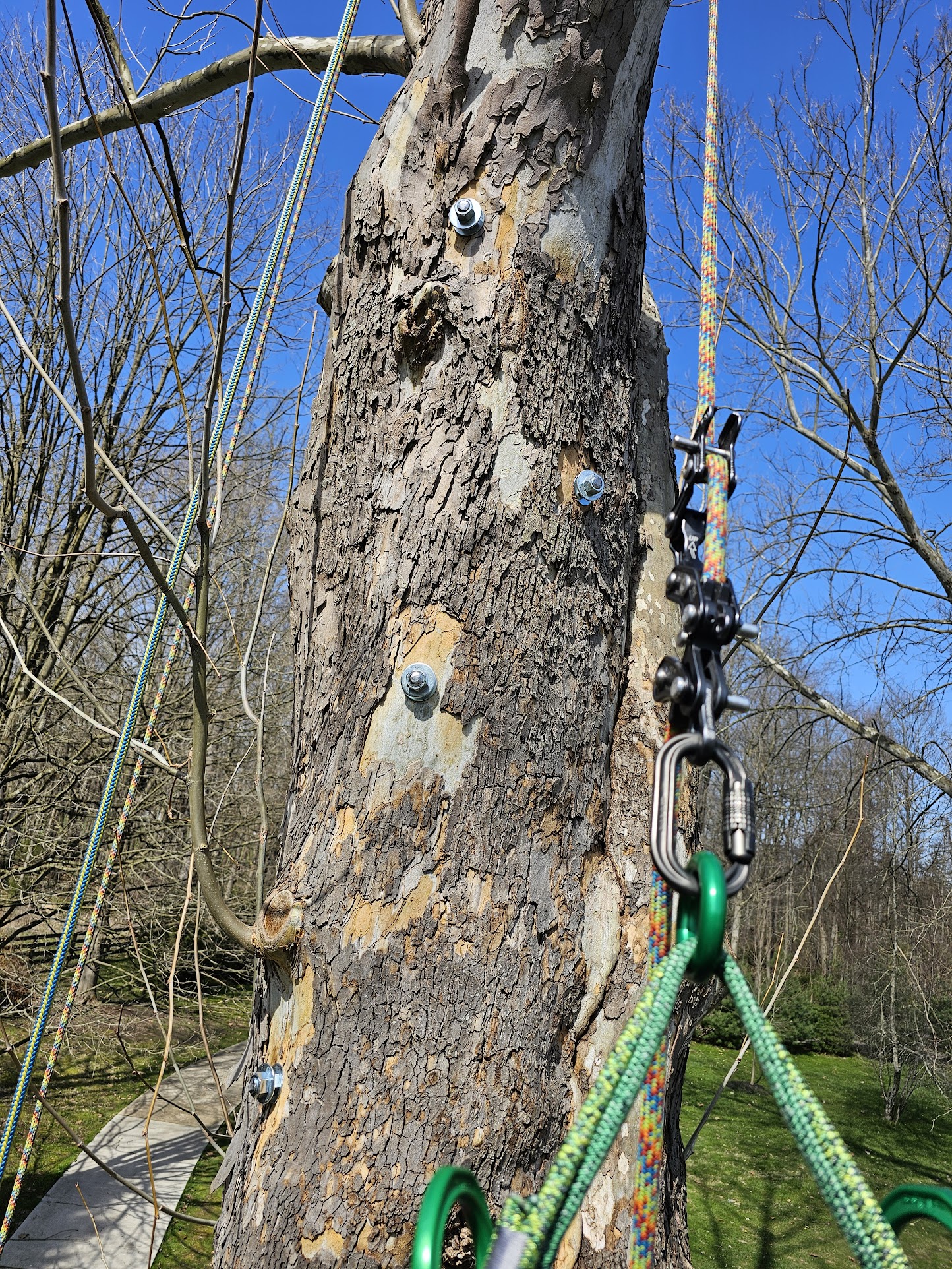
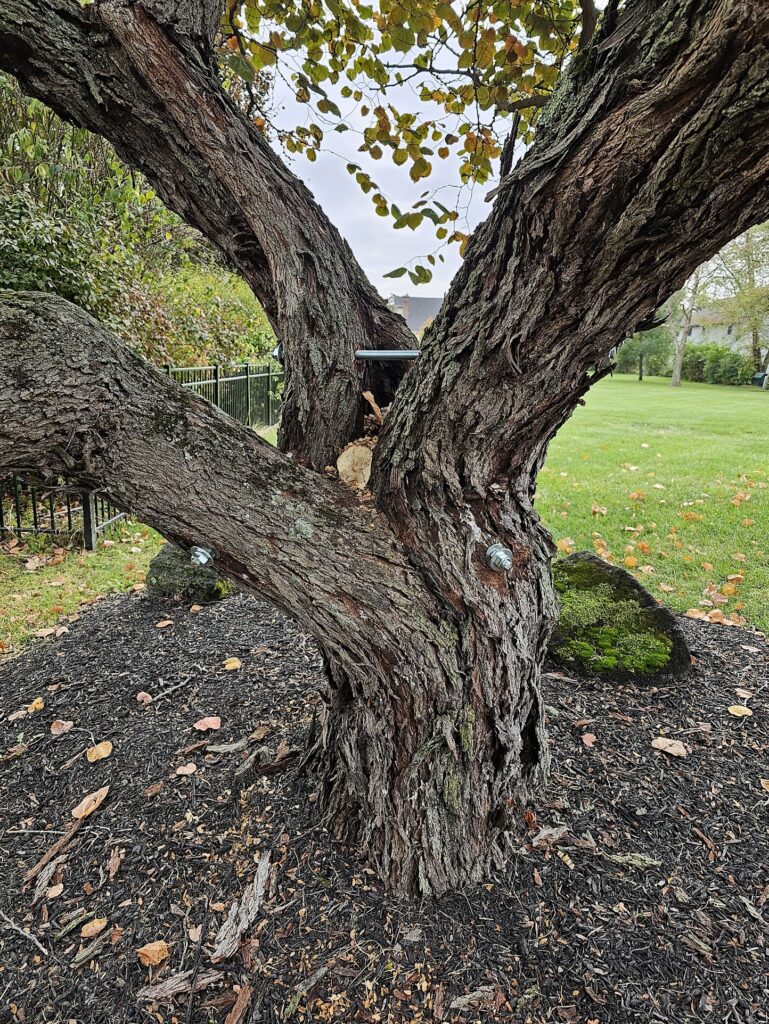
For most structural support applications, we prefer brace rods — threaded hardware installed through weak unions or included bark to hold stems together and prevent further splitting. For at-risk limbs requiring movement restriction, we use adjustable synthetic dynamic cabling with a typical lifespan of 6-10 years and recommended adjustment every two years. Permanent steel cables are reserved for situations involving significant decay or fungal compromise where dynamic cabling would not provide adequate support. All hardware is installed per ANSI A300 standards at the appropriate height and angle.
Cabling Is Not a Permanent Fix
Cables reduce risk — they do not eliminate it. We provide honest guidance on whether cabling is the right choice, or whether removal is the safer long-term option. Annual inspections are recommended for all cabled trees.
Related Services
Cabling is typically recommended alongside structural pruning to reduce load on supported limbs. If you are unsure whether cabling is the right approach, an arborist consulting visit can help clarify the options.
Wondering about tree cabling cost — we break down realistic pricing ranges for every service we offer.