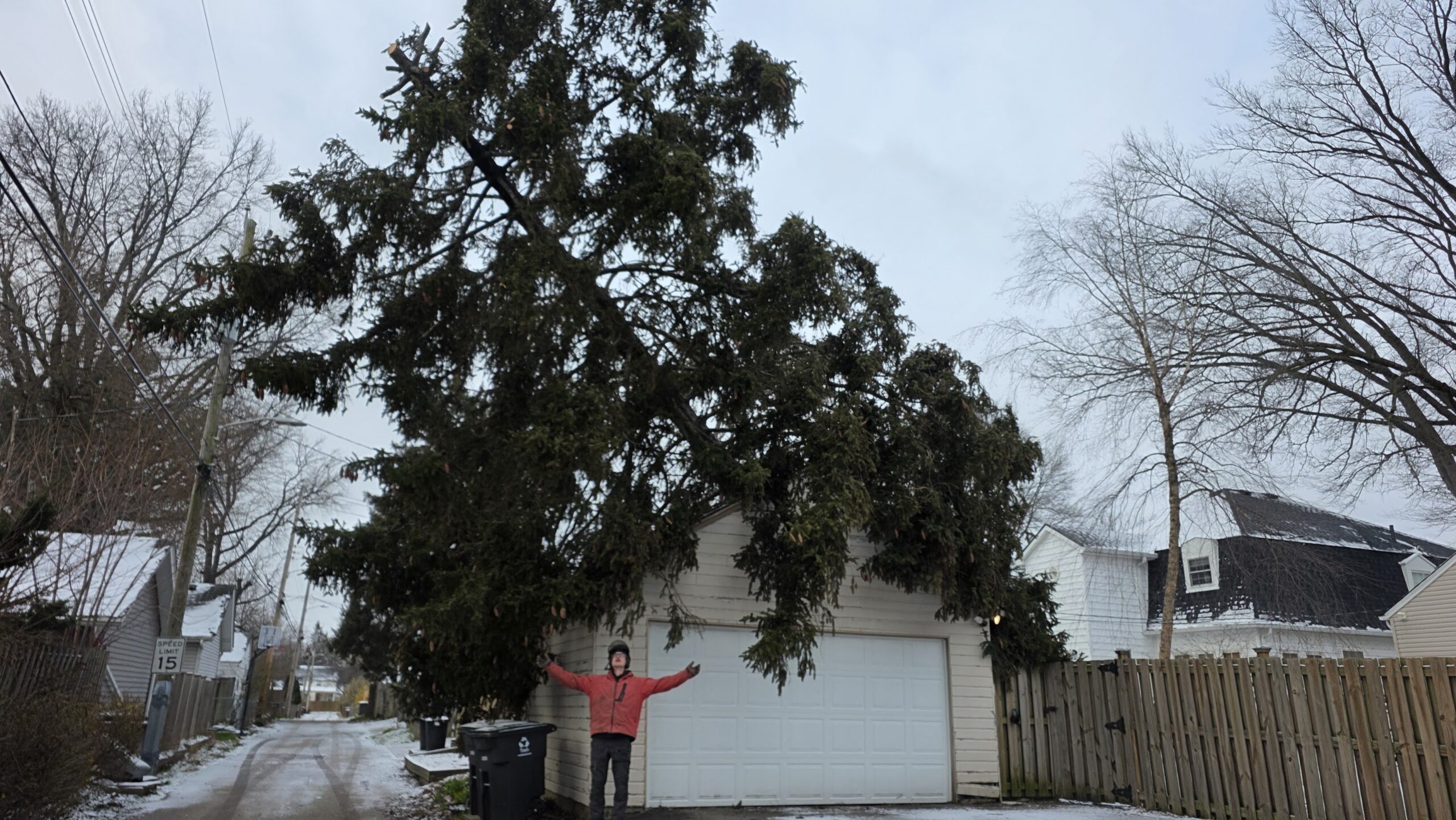
When a storm drops a limb on your property — or takes down a whole tree — the first call you want to make is to an arborist you already know, not a storm chaser you found at 10pm. If you are an existing Arborist Solutions client, you are our first priority after any major weather event. We know your trees, your property, and your situation. That matters when you are dealing with damage.
For new clients, we take storm damage calls as capacity allows, starting with the most urgent structural situations first.
Can the Tree Be Saved? That Is Always the First Question.
Most storm response companies show up with chainsaws. We show up with a certified arborist who starts by asking: does this tree need to come down, or can it be retained?
A lot of homeowners assume a storm-damaged tree has to go. That is not always true. A tree that lost a major limb may still have decades of structural life left with proper corrective pruning. A split co-dominant stem can sometimes be addressed with cabling and bracing. A tree that leaned or partially uprooted may be re-stabilized if root damage is limited and the lean is modest.
We give you an honest answer — not one that defaults to removal because removal is easier to sell. If the tree is worth saving, we will tell you how and what it takes. If it is not, we will explain why and help you move forward with removal. Most of the companies you will call after a storm are not having this conversation at all.
This assessment is part of what we do on every storm call. It is not an upsell — it is how we approach every tree.
What We Handle After a Storm
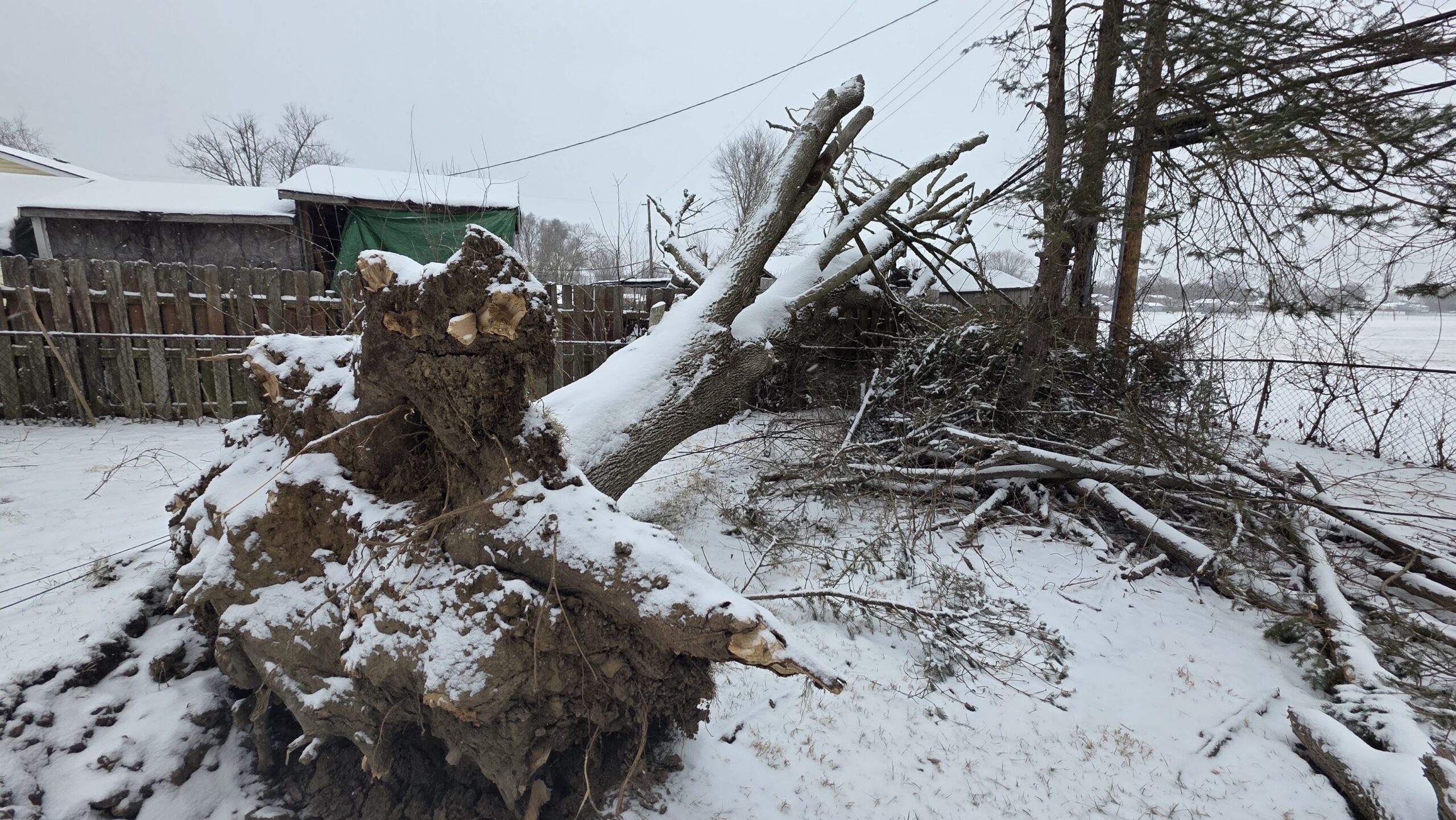
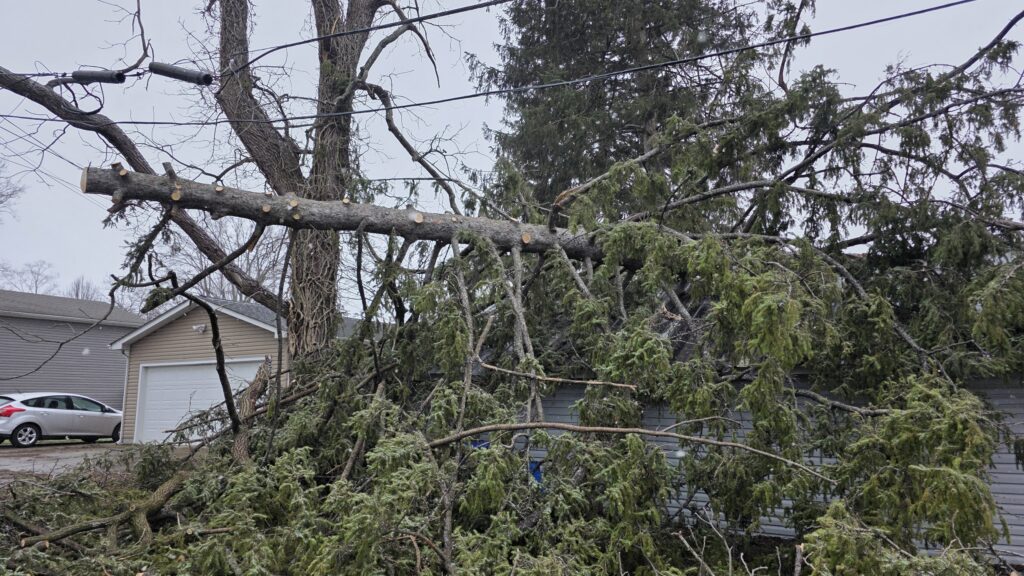
Storm damage ranges from minor to severe — a broken branch hanging over a roof, a split co-dominant leader that cracked under ice load, or a full uprooting that took out a fence and landed in the yard. We handle all of it, with the same preservation-first approach we bring to every job.
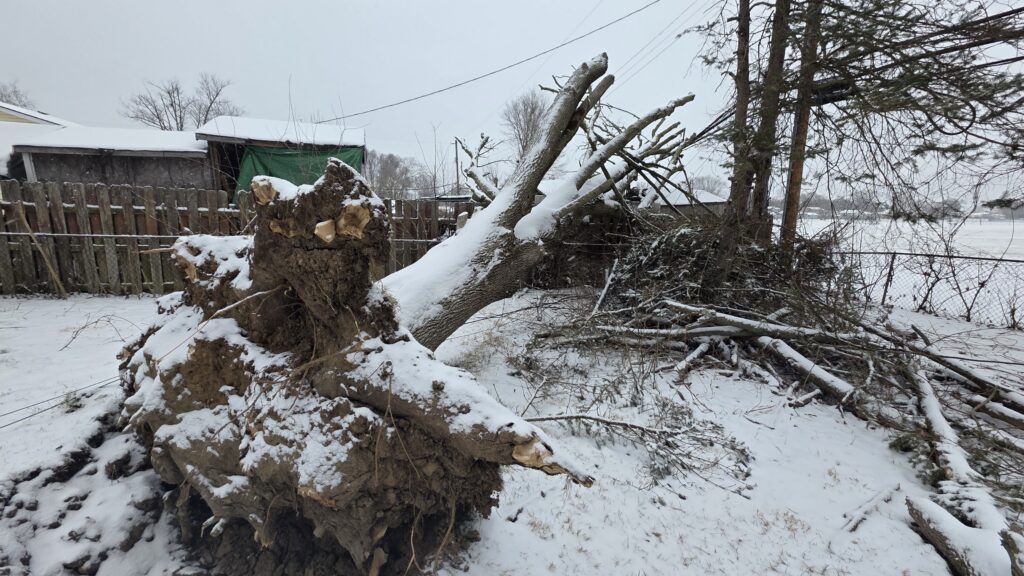
Fallen Tree Removal in Columbus
A fallen tree that is fully down and away from structures is generally a straightforward removal job. We cut, chip what can be chipped, and haul the rest. Stumps can be ground in the same visit or scheduled separately. Timing depends on crew availability and the number of other storm calls in the queue — we work through them in order of urgency.
If you need a cost estimate before cleanup begins, see our tree service cost guide for realistic ranges on storm removal. We do not give exact quotes over the phone without seeing the tree and site.
Storm Damage Near Structures
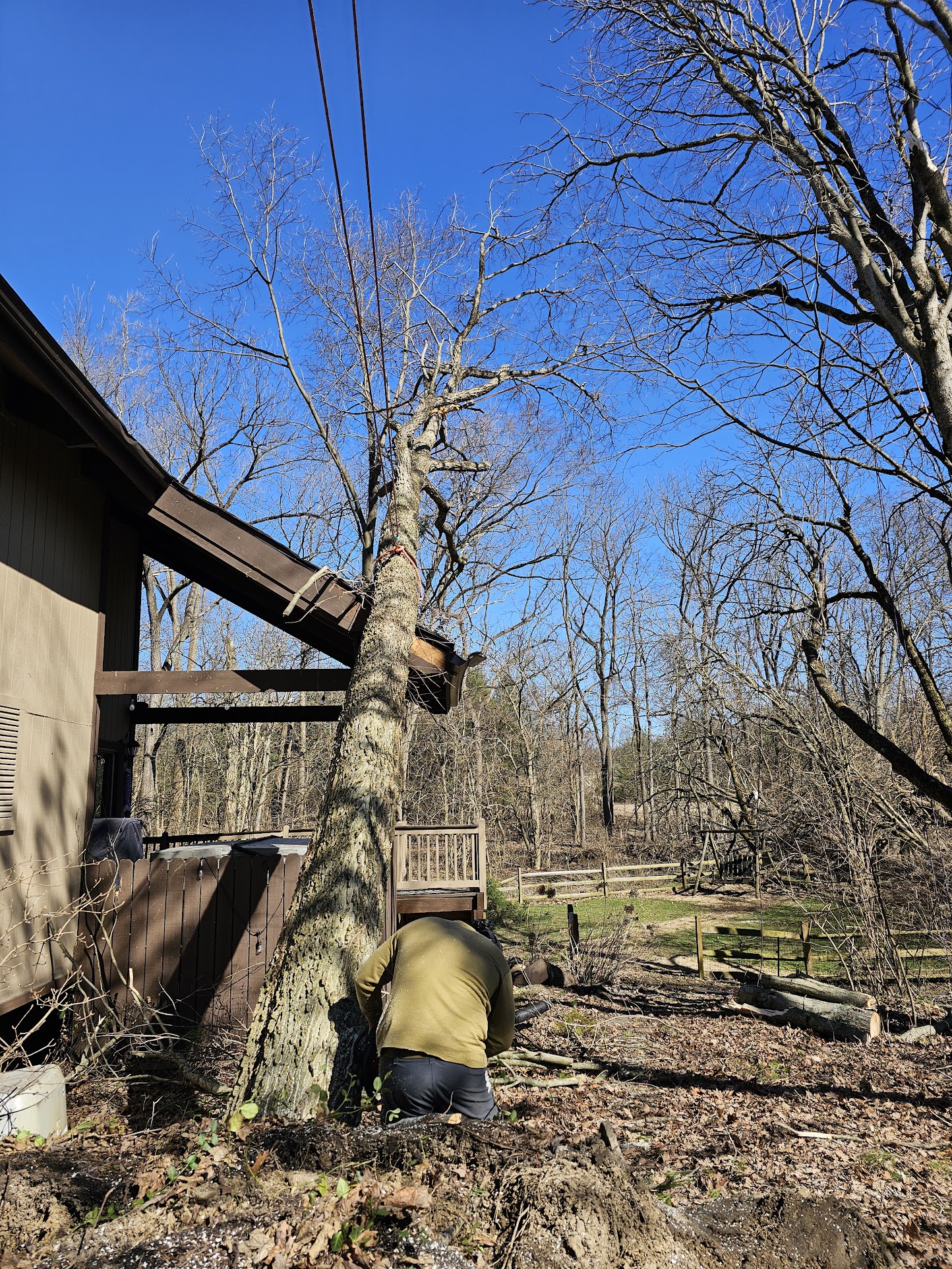
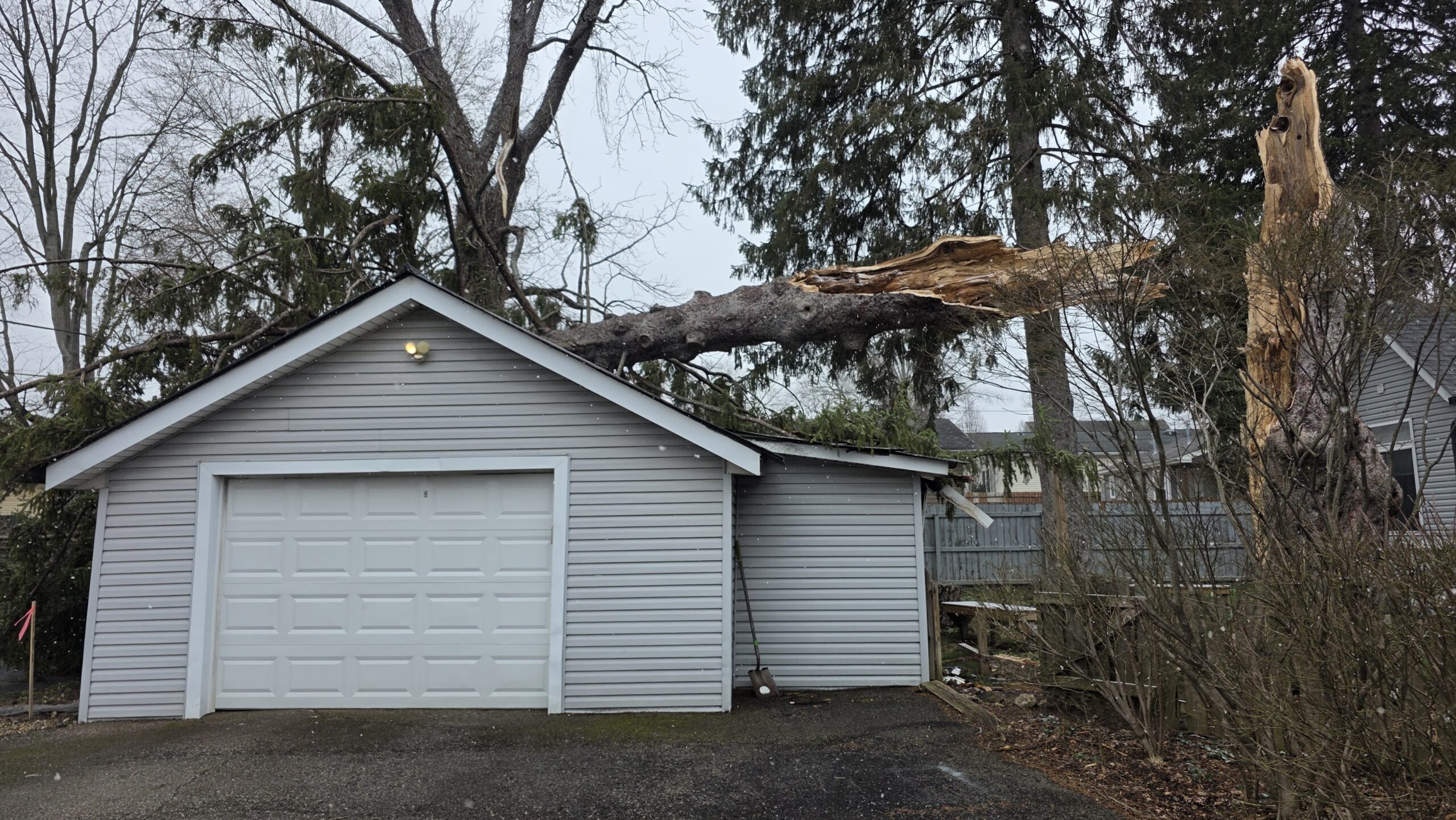
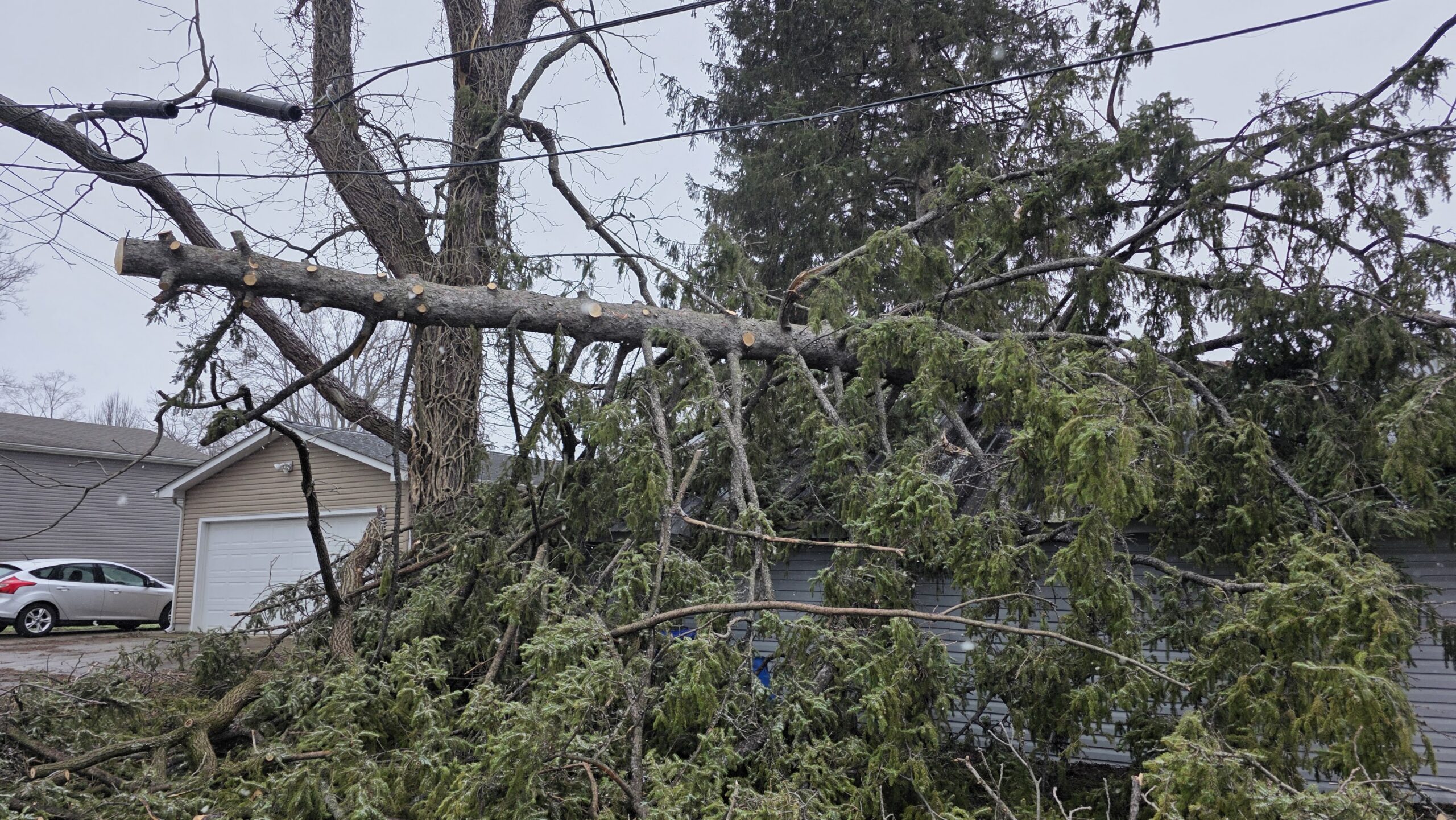
When a tree or large limb has landed on or against a house, fence, vehicle, or outbuilding, the job gets more involved. We assess the structural situation before any cutting begins — how the tree is loaded, what is holding it in place, and what will happen when specific cuts are made. This kind of work is done wrong more often than most people realize, and the consequences of getting it wrong are serious. We do not rush these jobs.
If a limb is on a roof, we coordinate with you on whether a contractor needs to be present or whether tarping is needed before we begin. We are not roofing contractors and do not make structural assessments of the building — our job is the tree.
Hanging Limbs and Widow Makers
A broken limb that is still attached to the tree — held up by bark, bark strips, or resting on other branches — is called a widow maker for a reason. These are high-priority calls. If you have one, do not walk under it, do not let kids or pets near it, and call us. Hanging limbs that look stable can drop without warning, especially as temperatures swing or wind picks up. We carry the equipment to remove these safely from the ground or from a bucket when needed.
Post-Storm Tree Assessment
After a significant storm, trees that are still standing may have damage that is not immediately obvious — root ball disturbance, included bark splits that opened and closed, co-dominant leaders that moved under load. These are worth having evaluated, especially on mature trees near the house.
As part of any storm cleanup visit, our arborists will flag anything they see that warrants a closer look. If you want a formal written evaluation — for insurance purposes, to document tree condition, or to support a removal decision — we offer arborist consulting visits that include written TRAQ reports.
Insurance and Storm Damage
Homeowner’s insurance typically covers tree removal when a tree has fallen on a structure — house, fence, detached garage. It generally does not cover removal of a tree that fell in the yard without hitting anything. We can provide a written invoice and documentation of the work if your insurer needs it. If you need a formal TRAQ risk assessment for an insurance claim, our consulting service covers that.
Existing Clients: How to Reach Us After a Storm
Call 614-784-3705 and leave a message if we do not pick up. We check messages during weather events and triage calls by urgency — active structural risk first, cleanup second. Text works too. We will get back to you in the order calls came in and by severity. If you have an immediate safety concern, say so clearly in your message.
We appreciate your patience during high-volume periods. We would rather do your job right than rush through it to get to the next one.
See our full tree service cost guide for storm damage removal pricing.