

I’m going to start with the tl;dr… Yes, they can. BUT… It all depends on the species of tree, proximity of the foundation, soil type, and land slope in proximity to the foundation
We all love the shade, beauty, and curb appeal that mature trees bring to a property. But when a massive tree is sitting just a few feet from your home, it’s completely normal to feel a little anxiety. Homeowners often ask us: Are those roots going to destroy my foundation?
Here is the reality of how tree roots interact with your home’s foundation, what we can do to stop them, and the hard truth about your real options given your situation.
The Myth vs. The Reality of Root Damage
There is a common misconception that tree roots are like underground torpedoes, forcefully punching their way through solid concrete.
In reality, roots are opportunistic. They don’t break perfectly good concrete; instead, they cause damage in two primary ways:
- Soil Shrinkage and Settlement: This happens whether you have tree’s or not. Clay soil (Like found here in Central Ohio) shrinks dramatically when it is dry. This can cause a perfectly packed foundation to end up with open space around it and can cause cracking and movement of the foundation. Trees will make this problem worse for a few reasons. Roots are constantly searching for moisture. During dry spells, a large tree can use hundreds of gallons of water a day, pulling that moisture directly out of the soil around your home. If you have expansive clay soils (like we have in Columbus, Ohio), this moisture loss causes the soil to dramatically shrink. When the soil shrinks, your foundation loses its support, leading to settling, cracking, and structural damage. Also during these dry spells, trees will lose some of their roots naturally, which will open up even more space for foundations to move. If you have trees showing signs of root stress, our root care and soil health services address exactly this.
- Exploiting Existing Cracks: While a root won’t pierce a pristine foundation wall, it will happily invade a pre-existing hairline crack to get to the moisture inside your crawlspace or basement. As the root grows and expands in diameter, it widens the crack, worsening the structural damage and letting water in. It is important to examine your foundation regularly and fill any cracks so the trees can’t become opportunistic.
- Species is everything: There are problematic trees or shrubs, and ones that are less likely to cause issues. In our experience, the following species are common problem trees; Oaks, Silver Maples, River Birch, Sycamore, London Plane, Red Maples, Baldcypress, Willows, Honeylocust, and Hackberries cause issues here in Columbus, Ohio. Ornamental Trees like Crabapples, Hawthorn, Magnolia, Weeping Cherry, Japanese Maple, Redbud, Dogwood, Serviceberry, and Alberta Spruce seem to cause little to no issues. Most Shrubs are okay, but Taxus and Juniper have also been known to cause problems from time to time.
Tree Root Barrier Installation: How We Protect Your Foundation
If you have a tree that is starting to encroach on your foundation but is still at a safe distance, we can step in and mitigate the risk. Our primary method for this is Root Barrier Installation.
How It Works
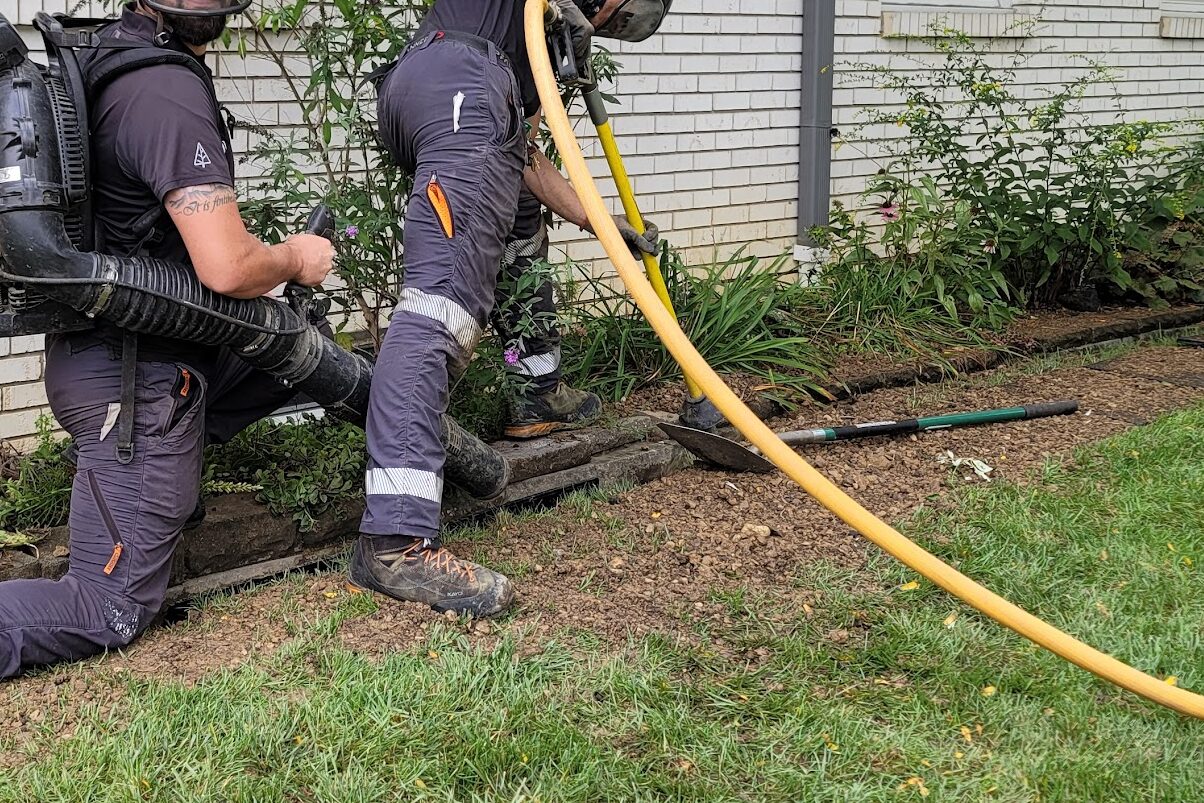
- Trenching: We dig a narrow trench between the tree and your foundation.
- Pruning: We carefully cut the encroaching roots that are heading toward your home.
- Barrier Placement: We install a tough panel system into the trench.
- Redirection: The barrier forces future root growth to redirect deeper into the ground and away from your foundation, protecting your home while allowing the tree to continue thriving.
The Hard Truth: When Mitigation Isn’t an easy Option
We are in the business of protecting your home, but we also have to be honest about the limitations of root mitigation. Proximity is everything.
If a large, mature tree is planted right up against your foundation, installing a root barrier may not be possible. Here is why:
The Structural Root Zone: Trees rely on large, woody roots near their base to keep them anchored upright. If a tree is too close to your house, installing a root barrier requires severing these critical anchor roots.
Cutting a tree’s structural roots creates an immediate, severe hazard. The tree could easily topple over in the next strong windstorm—crashing directly onto the very home you were trying to protect. Furthermore, removing a massive percentage of a tree’s root system all at once will often send the tree into shock, slowly killing it over the next few years.
The Bottom Line: If the tree is simply too close to the foundation, there are no viable mitigation options that will save both the house and the tree. In these extreme cases, tree removal is unfortunately the only responsible way to protect your property’s structural integrity. If tree removal isn’t an option, we recommend reinforcing your basement with I beams and Straps utilizing a local Basement or foundation company. You don’t want to wait until the damage happens or your home can settle and cause other issues.
Don’t Wait Until the Walls Crack
Ignoring a suspicious tree won’t make the roots stop growing. If you are worried about a tree in your yard, the best thing you can do is get a professional assessment before the concrete starts cracking or the doors stop shutting properly.
We can evaluate the species of the tree, the soil type, and the proximity to your home to tell you exactly what your options are—whether that’s a preventative root barrier or a recommendation for removal.
Reach out to our team today to schedule an evaluation and protect your home from the ground down.
James Benedetto
ISA Certified Arborist OH-7011A
Tree Risk Assessment Qualified