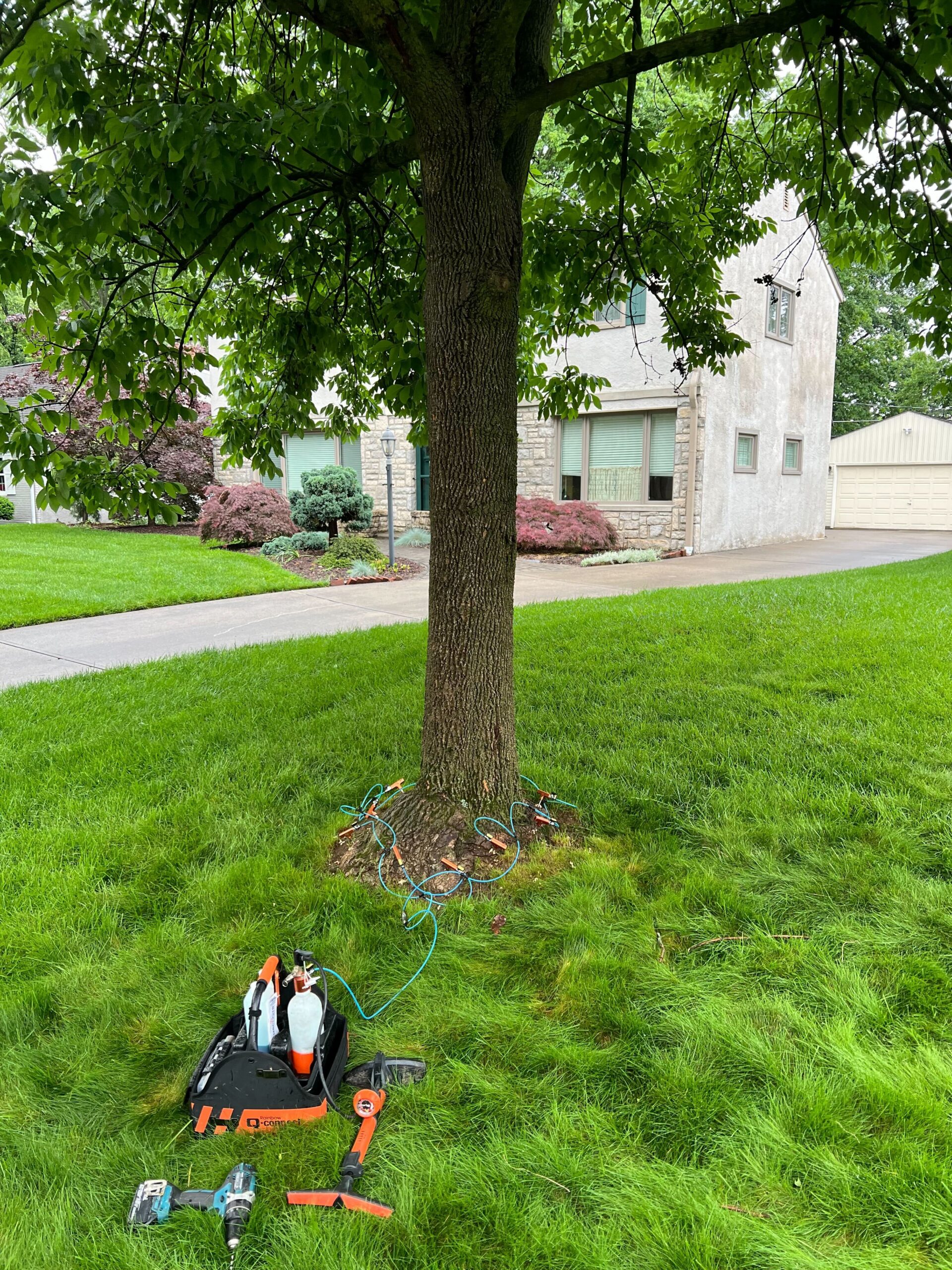
The emerald ash borer (EAB) has reached every county in Ohio. Untreated, an infested ash tree typically dies within 3 to 5 years of initial infestation. Treated proactively with trunk injection, ash trees can be preserved indefinitely with retreatment every two to three years depending on the product used.
Signs of Emerald Ash Borer Infestation
Catching EAB early is the difference between a tree that can be saved and one that cannot. Here are the signs to look for on Ohio ash trees:
- Canopy thinning and dieback: The most visible early sign. Foliage in the upper crown becomes sparse and branches begin dying back from the top down. By the time 50% of the canopy has died, treatment is usually no longer cost-effective.
- S-shaped galleries under the bark: EAB larvae feed between the bark and sapwood, creating distinctive serpentine galleries. These are visible when bark is peeled from a declining section of trunk or branch.
- D-shaped exit holes: Adult beetles emerge through perfectly D-shaped holes approximately 4mm wide. These are the clearest diagnostic sign. Round or oval holes indicate a different boring insect.
- Bark splits and woodpecker activity: Woodpeckers feed heavily on EAB larvae. Unusual flaking or gouging of bark, called blonding, is a strong indicator of an active infestation underneath.
- Epicormic sprouting: Clusters of small shoots emerging from the trunk or root flare are the tree stress response to canopy loss from EAB damage.
- Yellowing or early fall color: Foliage that yellows earlier than surrounding trees or appears generally unhealthy in mid-season.
If you are seeing two or more of these signs on an ash tree in Columbus, Dublin, Westerville, Worthington, or anywhere in Central Ohio, it is worth having an arborist evaluate the tree before deciding on treatment vs removal.
Is Treatment Worth It?
It depends on the tree and how far the infestation has progressed. Our general guidelines:
- Less than 30% canopy dieback: Strong candidate for treatment. Trunk injection now protects the tree and prevents further damage.
- 30 to 50% canopy dieback: Treatment may still be worthwhile for a large, well-positioned, otherwise healthy tree. Worth evaluating with an arborist.
- Greater than 50% canopy dieback: Treatment is generally not recommended. The tree is unlikely to recover meaningful canopy, and removal and replanting is the better investment.
We will give you a straight answer. We do not push treatment on trees that are past the point of recovery.
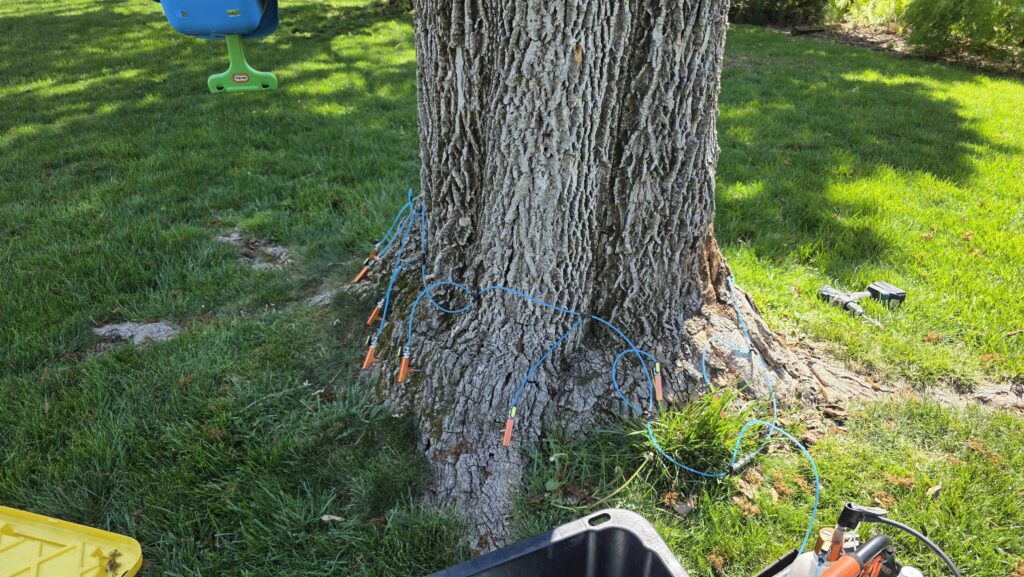
EAB Treatment Method: Trunk Injection
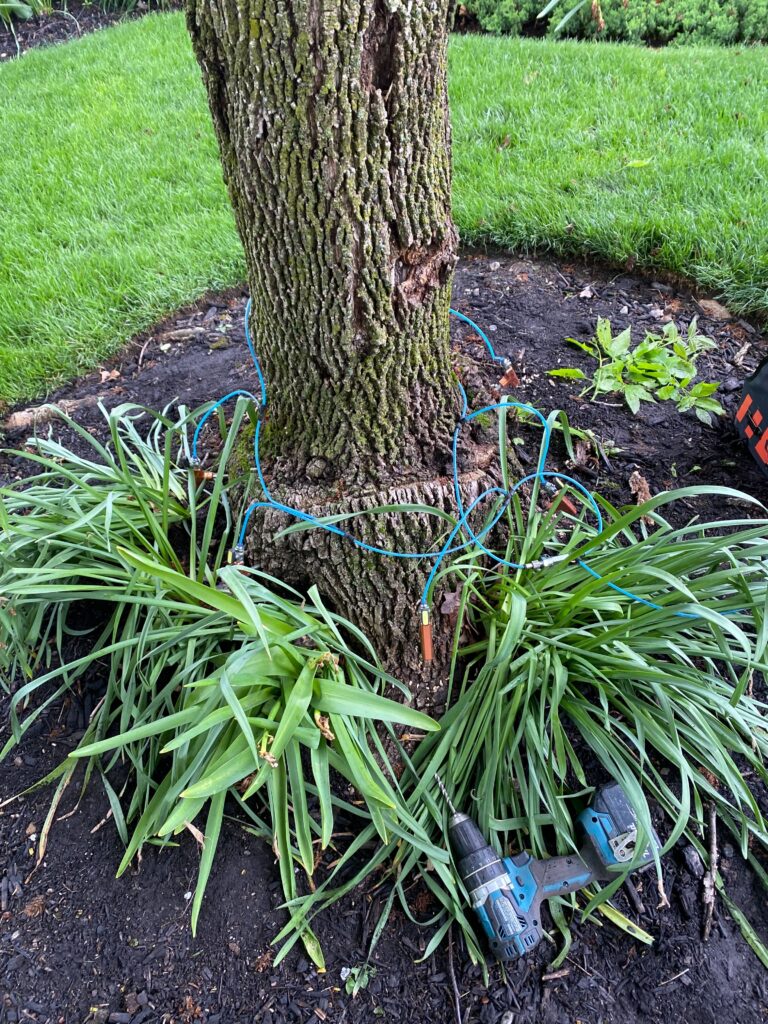
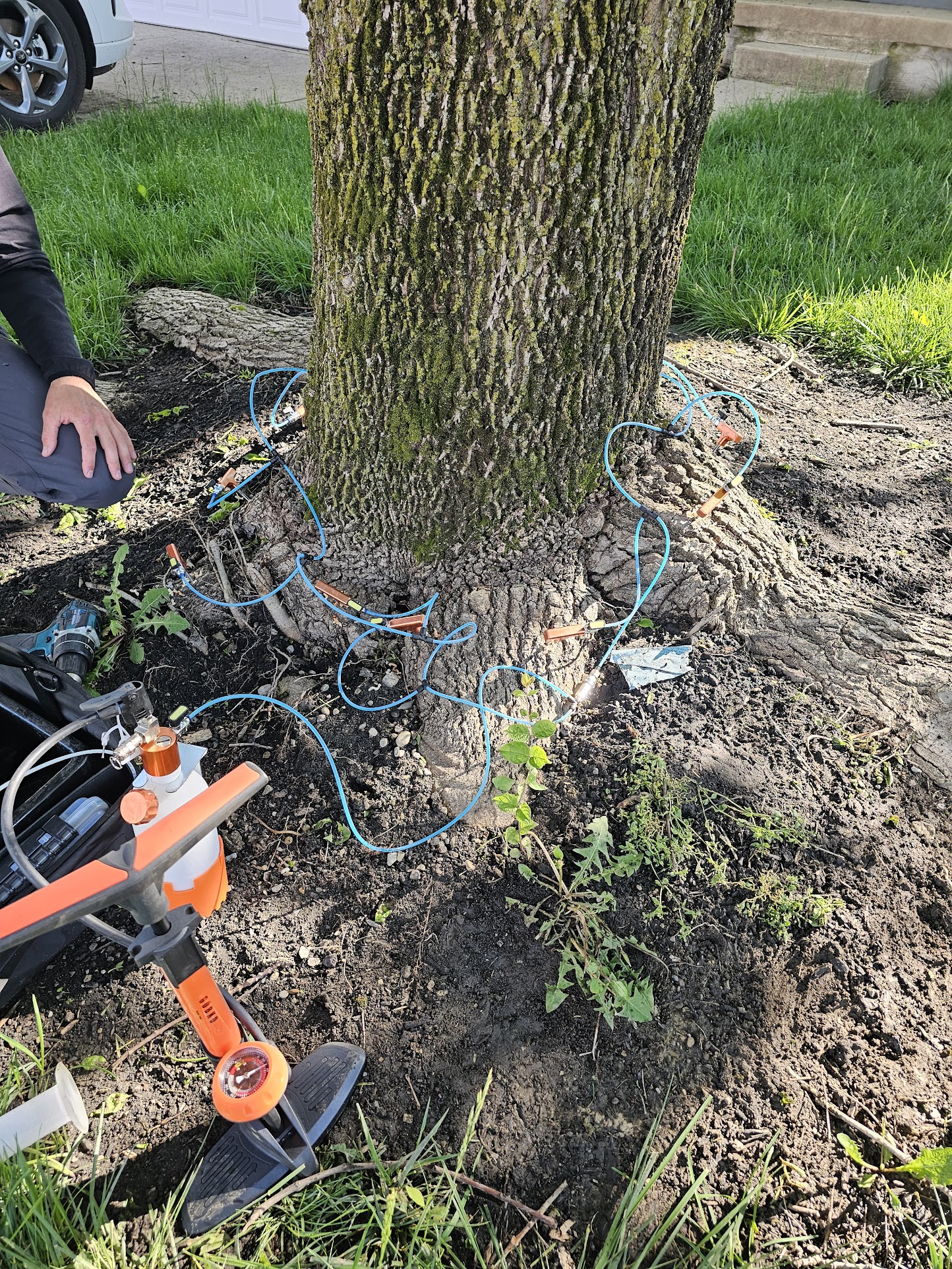
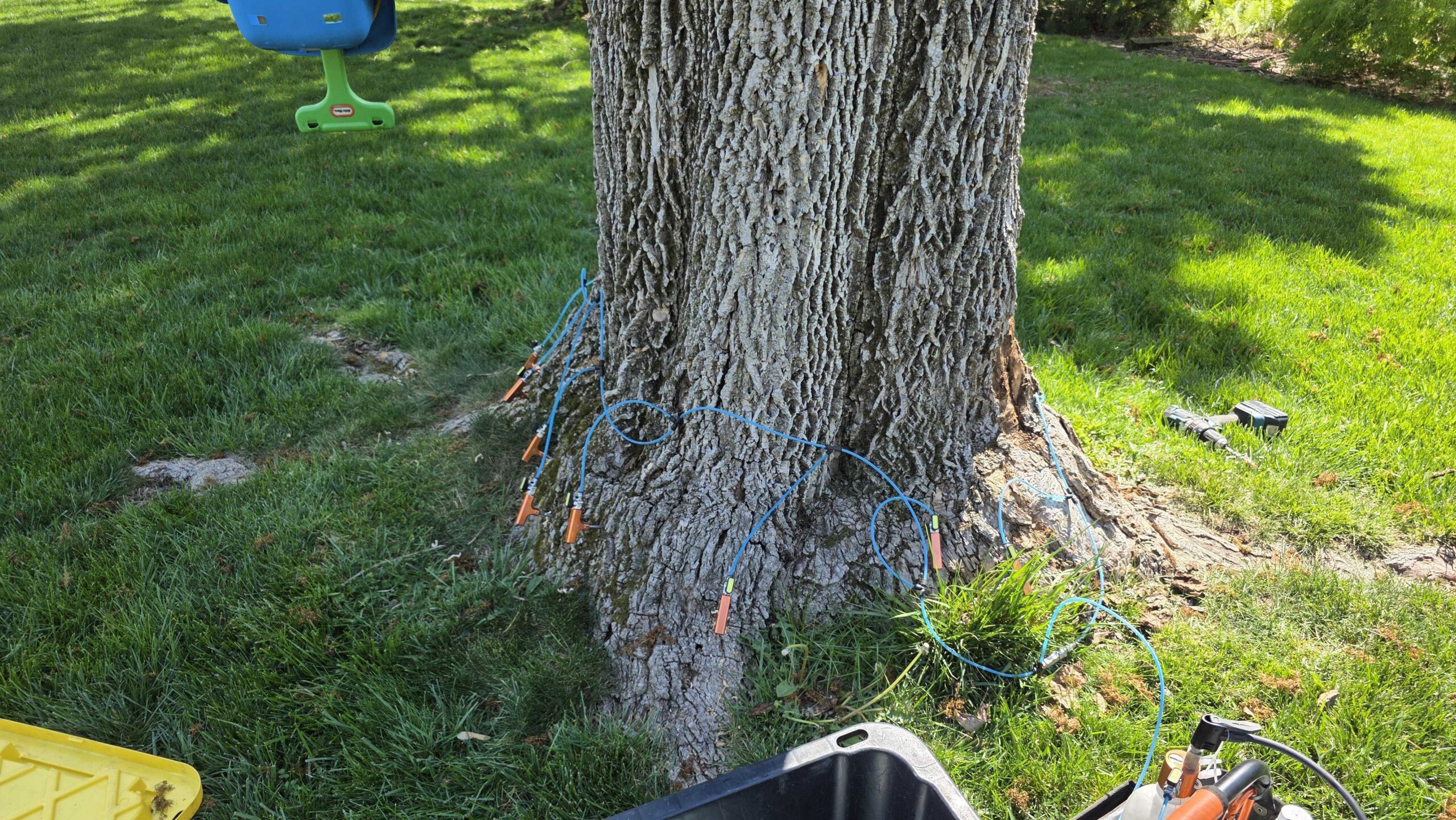
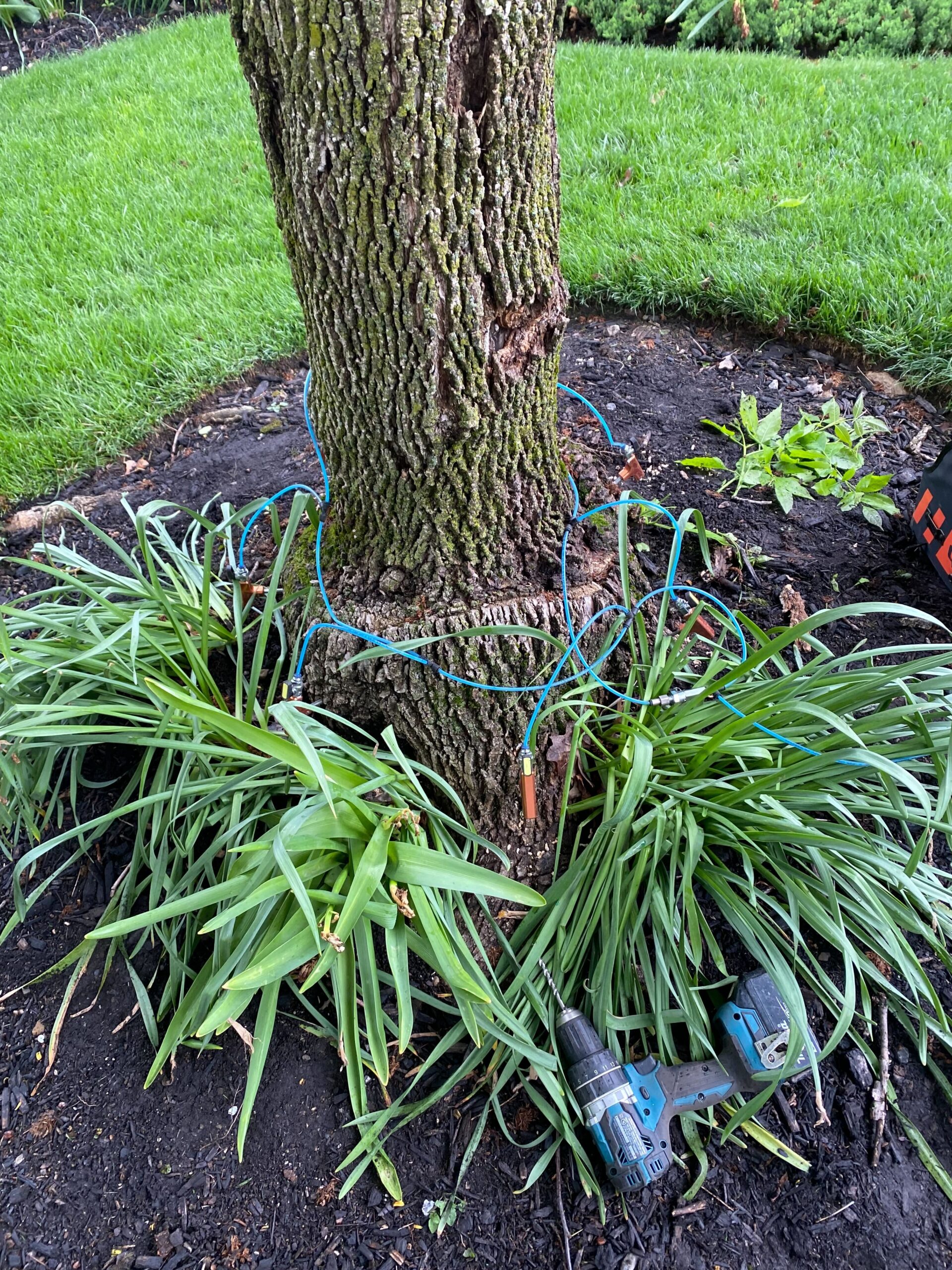
We use trunk injection with emamectin benzoate (TREE-age) — the gold standard for EAB treatment, with two to three years of protection per application. Injection is minimally invasive, highly effective for trees with less than 50% canopy decline, and significantly less expensive than removal. Ohio Licensed Pesticide Applicators on staff perform all treatments.
Soil injection and basal bark spray methods are also available depending on site conditions and tree size.
Ash Trees Throughout Central Ohio
EAB is active throughout Franklin, Delaware, Union, Licking, and Fairfield County. Every Columbus suburb — Dublin, Worthington, Westerville, Upper Arlington, New Albany, Granville, Grandview Heights — has significant ash populations under active EAB pressure. If you have ash trees and have not had them evaluated, the window for cost-effective treatment narrows each season.
Curious about how much EAB treatment costs compared to ash tree removal? We break down realistic pricing ranges for both.
Learn About Plant Health Care →